

When everything is predictable, workers make fewer mistakes.
If you’re running a busy operation in the UK, we see the reality every single day. Most UK warehouses run on a patchwork of old markings, different signage styles, ad-hoc repairs, and inconsistent barrier types. You didn't design it this way, but you inherited it. And the result? Confusion, heightened risk, slower operations, and poor audit outcomes.
At Fastline, we look at operator error differently. It’s almost never a human failure. It’s a symptom of a disorganised, inconsistent operating environment. If your system is confusing, you're actively breeding risk. The next strategic move is clear: Standardisation in warehouse operations.
We’re here to show you how implementing a unified, engineered visual language—from demarcation to equipment zoning—turns your floor from a liability into a high-performance asset. This isn't about ticking boxes; it’s about delivering measurable improvements in safety and uptime.
What is Warehouse Standardisation?
Warehouse Standardisation is the modern, strategic approach to operational risk management, focused on eliminating the chaotic "patchwork" environment common in many facilities. It means moving beyond minimum compliance by implementing a unified, engineered visual language across your entire site. This involves systematically defining and installing consistent, durable physical systems—including line marking, traffic flow routes, safety signage, and impact protection barriers—to ensure every operator and pedestrian instantly understands their environment. The goal is to remove all ambiguity, reduce cognitive load, and make the desired safe behaviour the easiest and most predictable option, directly leading to lower error rates, increased efficiency, and sustained uptime.
The Cost of Chaos
When operational standards are constantly degrading, the only thing that rises is risk, and that hits your balance sheet hard. Accidents, injuries and downtime equal big financial blows that put the cost of proactive investment into perspective.
- The Problem is the Design, Not the Driver: Too often, an incident is blamed on "operator error." We argue the opposite. Being struck by a moving vehicle remains a critical sector challenge. These incidents are directly linked to environments with inadequate segregation and poor visibility. If the physical layout is confusing, you have a design failure, not a training failure.
- The True Cost of Downtime: Patchwork safety systems breed risk, and risk guarantees downtime. Unplanned downtime costs UK manufacturers up to £736 million every week. For major operators, a single error-induced incident could cost £1.36 million per hour. Standardisation is your non-negotiable insurance policy against this crippling financial risk.
- The Financial Urgency: The overall estimated cost of workplace injury and ill health to Great Britain in 2023/24 was a staggering £22.9 billion. This figure proves that the reactive, "patch-and-pray" approach is financially unsustainable. The only viable path forward is to be proactive, strategic, and data-driven.
How to Implement Warehouse Standardisation
The 5-Point Blueprint
Standardising the warehouse requires five strategic, physical interventions. This is the blueprint for engineered safety and sustained uptime.
1. Consistent Signage: Speaking a Unified Language
To minimise human error, the visual communication on your site must be instant and universal.
Every safety sign, warning, and informational graphic must conform to the latest ISO 7010 standards (or equivalent HSE guidance) across the entire estate. Any deviation forces an operator or pedestrian to stop, interpret, and process a difference, which wastes critical milliseconds and increases risk. The colour-coding and iconography must be identical in every corner of the facility.
- Result: You remove cognitive dissonance, allowing your workforce to react instantly and predictably to all safety communications.
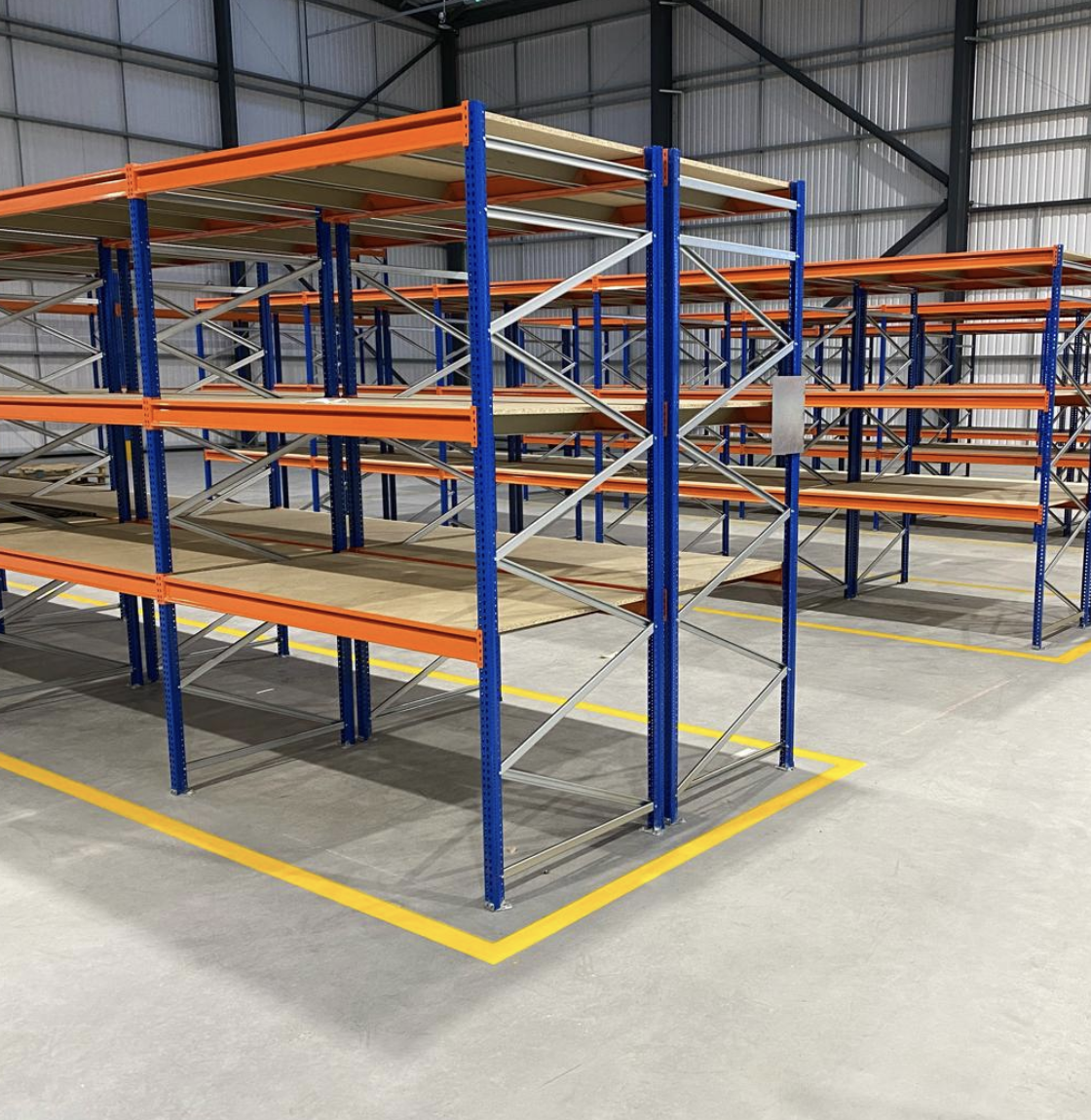
2. Racking Labels: Navigational Safety & Efficiency
Precision labelling is not just an inventory exercise; it is a critical component of traffic management and error elimination.
Implement clear, large, high-contrast rack-end and bay labels using a facility-wide standard indexing system. Poorly marked or faded racking forces MHE (Material Handling Equipment) operators to slow down, hesitate, or take unpredictable deviation paths while searching for a location. This behaviour is a common catalyst for collisions and near-misses.
- Result: Drivers execute routes more confidently and efficiently, reducing "hunting" time and eliminating unnecessary slowing or stopping in high-traffic lanes.
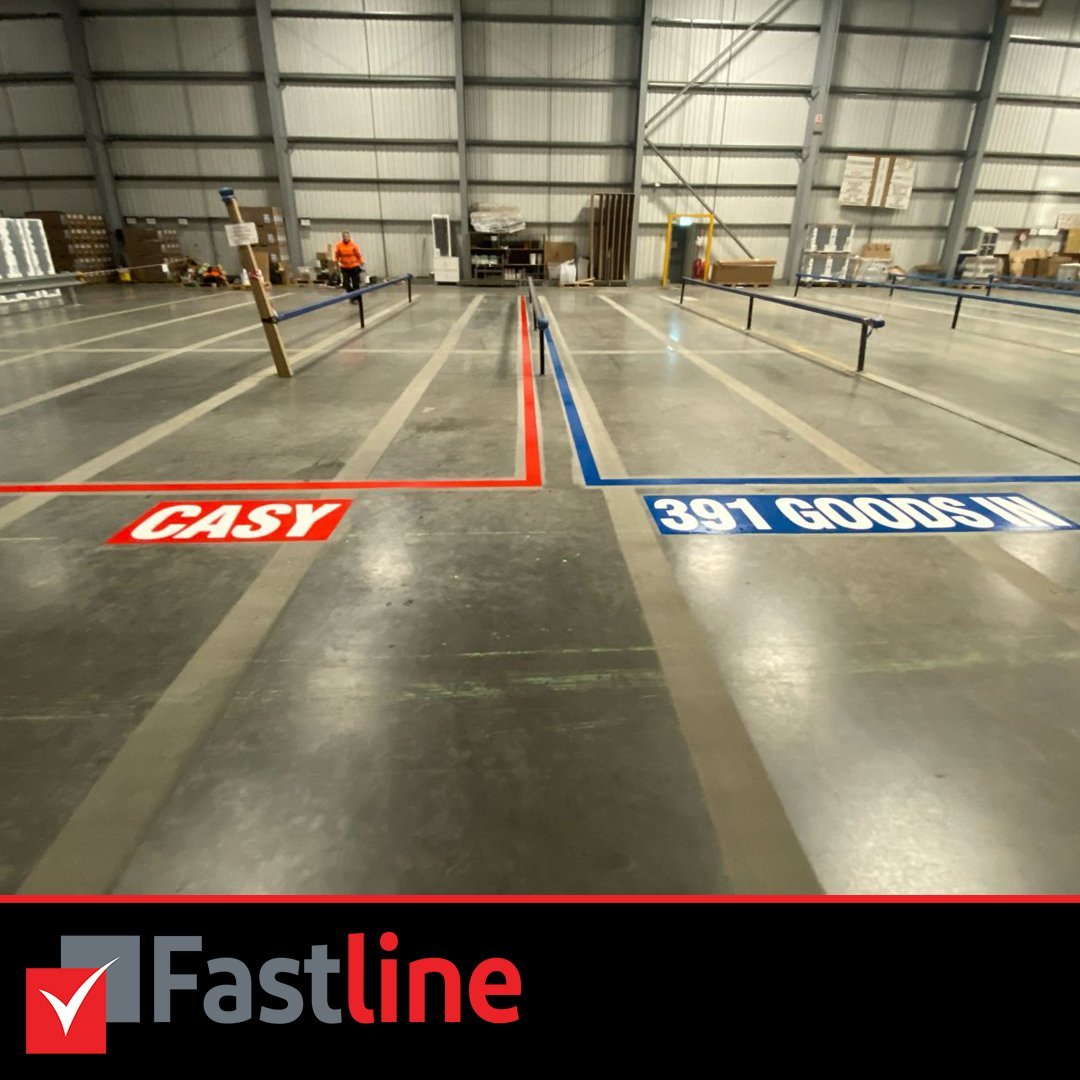
3. Equipment Zones & Segregation: Defining Boundaries
Ambiguity is the enemy of safety. Segregation requires both visual clarity and physical enforcement in high-risk zones.
Clearly demarcate all non-operational areas—including charging stations, staging lanes, maintenance bays, and pedestrian walkways—using highly visible, durable floor markings. Critically, these zones must be backed by appropriate impact protection systems (e.g., polymer barriers and guardrails) to physically separate MHE from people, assets, and critical infrastructure. This dual approach meets HSE requirements for robust pedestrian and vehicle segregation.
- Result: Critical assets and personnel are protected from vehicle impact, while clear visual boundaries define safe movement for everyone.
4. Speed Limits & Traffic Flow: Engineered Compliance
The physical design of the site should enforce safety rules, reducing reliance on human memory or discretion.
Implement a definitive Warehouse Traffic Management Plan. Use highly durable floor coatings and markings to define one-way systems, intersection warnings, and right-of-way rules. In high-risk areas (pedestrian crossings, blind corners), use engineered techniques like visual narrowing of the vehicle path or tactile flooring strips to naturally cue the driver to reduce speed, rather than relying solely on a simple sign.
- Result: Speed compliance becomes an intuitive consequence of the environment, not a disciplinary issue.
5. Visual Cues for Operational Excellence
Safety and efficiency are intertwined, as demonstrated by Lean/5S principles. Standardisation (the "S" in 5S) makes problems instantly visible.
Use Visual Management techniques across work areas. This includes shadow boarding for tools, colour-coding for waste and maintenance points, and precise floor markings to define where stock and equipment must be stored. If a tool is missing or a pallet is infringing on a vehicle lane, the problem is obvious merely by looking at it.
- Result: You drastically reduce the invisible exhaustion of constantly checking, replacing it with instant problem recognition and enabling continuous improvement.
The Next Strategic Step: Sustained Performance
The modern warehouse is not just a project; it’s a system. The key to sustained high performance is recognising that safety features degrade over time—a subtle process we call risk drift.
High-performing organisations avoid the costly cycle of reactive, emergency repair. They secure their initial investment in standardisation by implementing a process of Continuous Improvement and Planned Maintenance.
This proactive approach is the industry best practice. It means spotting subtle degradation before it becomes a catalyst for operator error. This strategic shift ensures the predictable, high-performance operating system you invest in today delivers long-term uptime and minimal risk, which ultimately helps in eliminating operator error in logistics.
Take Control
The era of patching up safety problems is over. Standardisation in warehouse operations is the most effective way to eliminate human-driven error, improve safety, and safeguard your productivity. It’s about being smarter, not just harder.
To take control of your environment and begin assessing your path to a fully standardised, high-performance operation, you don't just need a contractor; you need a strategic partner.
Fastline combines the high-level consultancy and planning expertise of a firm that understands operational risk with the precision and durability of a strategic implementation partner that executes the work flawlessly.